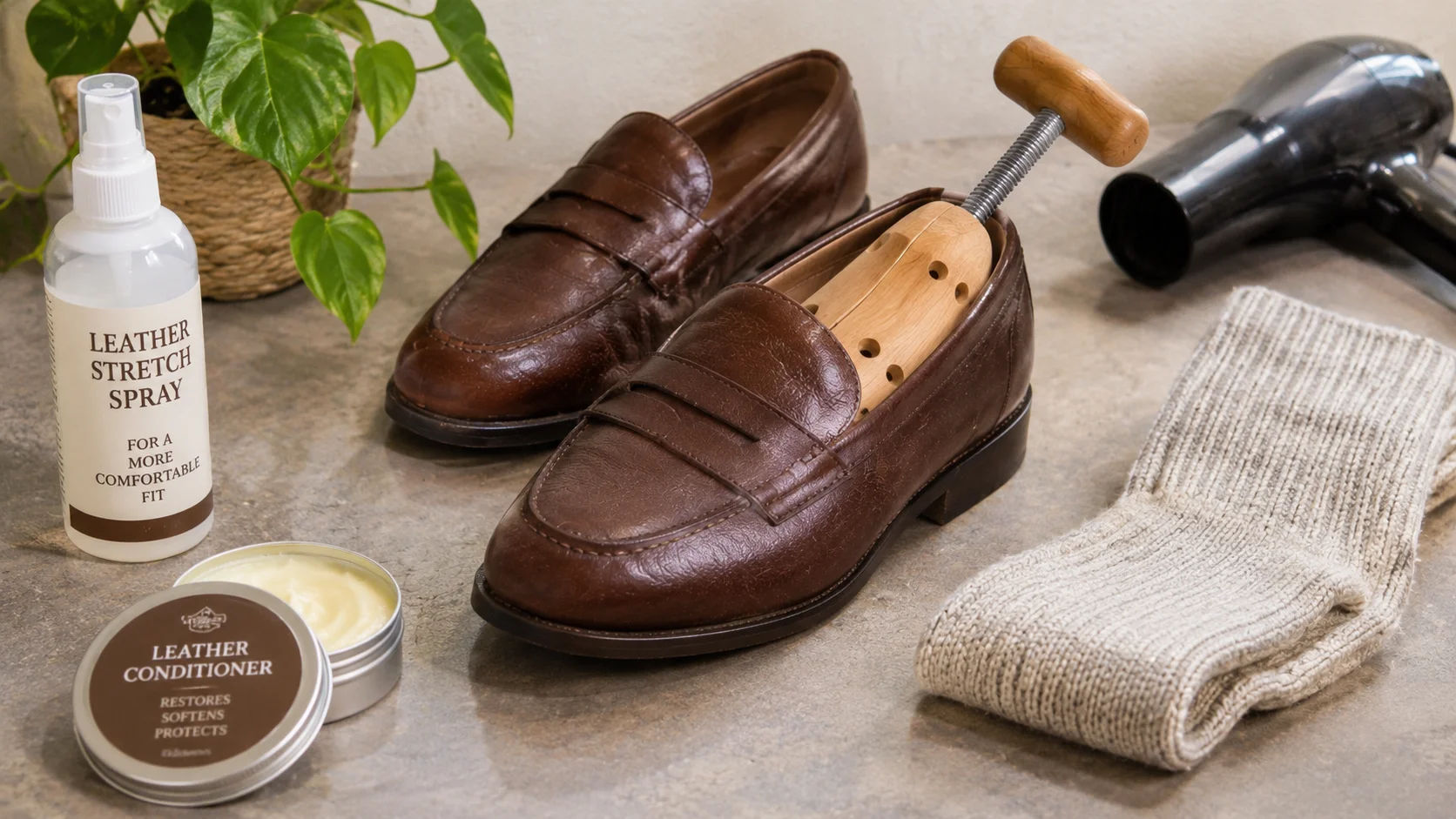
How to Stretch Leather Shoes at Home: Safe Ways to Get a Better Fit
Your new leather loafers look perfect, but the sides pinch after a few minutes. Or your favorite flats rub across the toes even though the length seems right. Before you give up on them, you can try a few careful ways to stretch leather shoes at home. Genuine leather can soften and give a little, especially around the width and instep, but it cannot reliably turn a shoe that is too short into the right size. The safest approach is to start gently, target only the tight area, and check the fit after each attempt. Here are the methods worth trying, what to avoid, and when a cobbler is the better choice.
Quick Answer: What Is the Safest Way to Stretch Leather Shoes?
For slightly tight leather shoes, start by wearing them indoors for short sessions with thick socks. If one area still pinches, use a two-way shoe stretcher and increase the pressure gradually. A low-heat hair dryer can help soften a small tight spot, but it carries more risk and should be used cautiously. If the shoes are expensive, delicate, or painful, take them to a cobbler instead.
Before You Start: Check Whether the Shoes Can Be Stretched
First, identify where the shoe feels tight. Pressure across the ball of your foot, the sides of the toe box, or the instep may respond to gentle stretching. A shoe that presses your toes against the very front is a length problem, and stretching is unlikely to solve it.
Material matters, too. Smooth, genuine leather generally has more give than synthetic leather or heavily coated finishes. Suede can stretch, but its surface marks easily. Patent leather has a glossy coating that makes it less flexible, so avoid aggressive DIY methods. If you are unsure what the upper is made from, check the shoe label or the manufacturer’s care instructions first.
Do not continue if the shoes cause sharp pain, numbness, tingling, or make you change the way you walk. A little stiffness is different from a poor fit. If the shoes are new and returnable, exchanging them for the correct size or width may be the better decision.
1. Wear Thick Socks Around the House
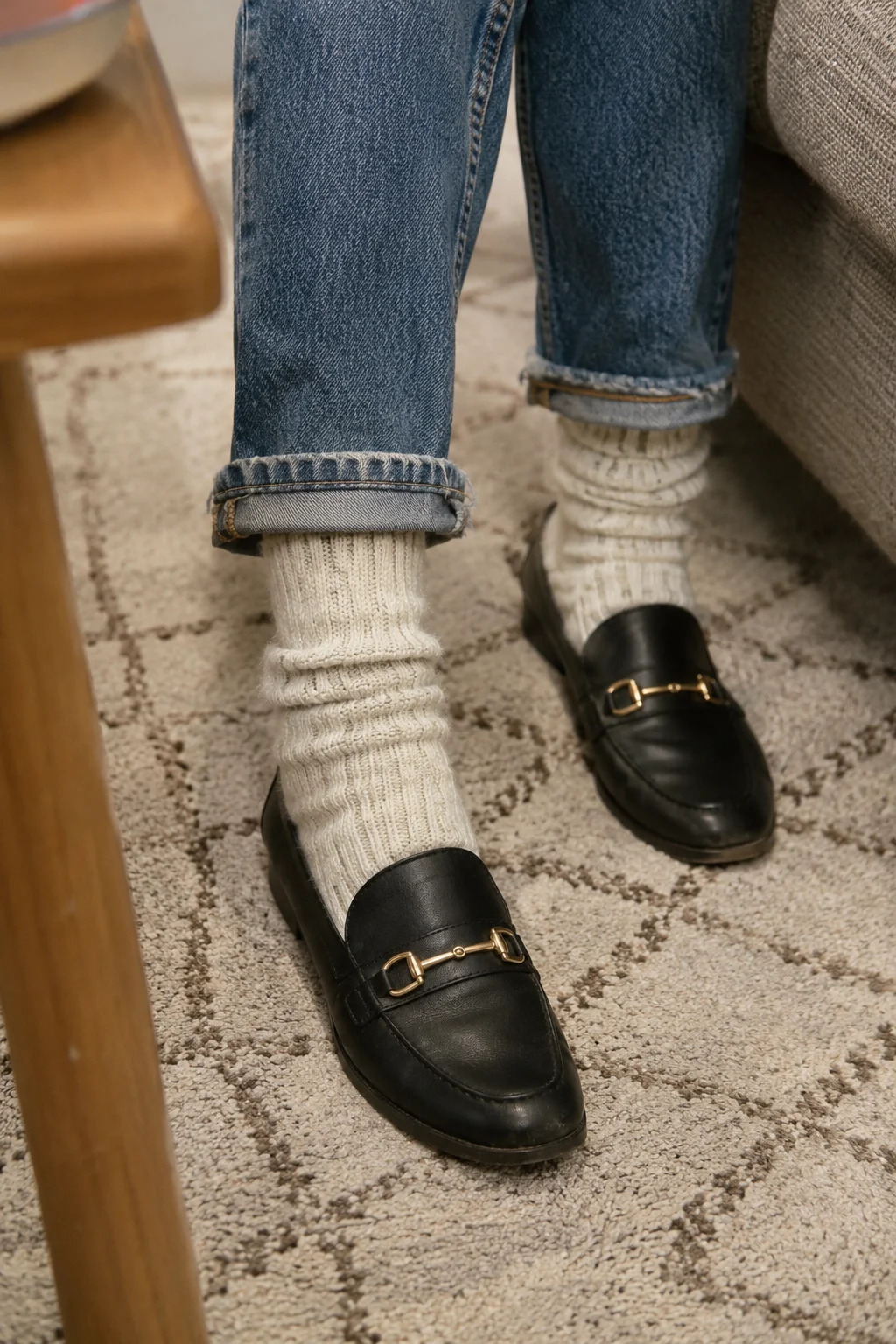
This is the gentlest place to begin when your leather shoes feel only slightly snug. Put on a pair of thicker socks, then wear the shoes indoors for about 15 to 20 minutes. Walk on a clean carpet, flex your feet naturally, and remove the shoes if you feel pain or strong pressure.
Repeat short sessions over several days rather than wearing the shoes all afternoon on the first try. Your body warmth and the gentle pressure from the socks can help the leather gradually adapt to your foot. If the shoes are tight only across the forefoot, choose socks that add a little room there without making the heel painfully tight.
2. Use an Adjustable Shoe Stretcher
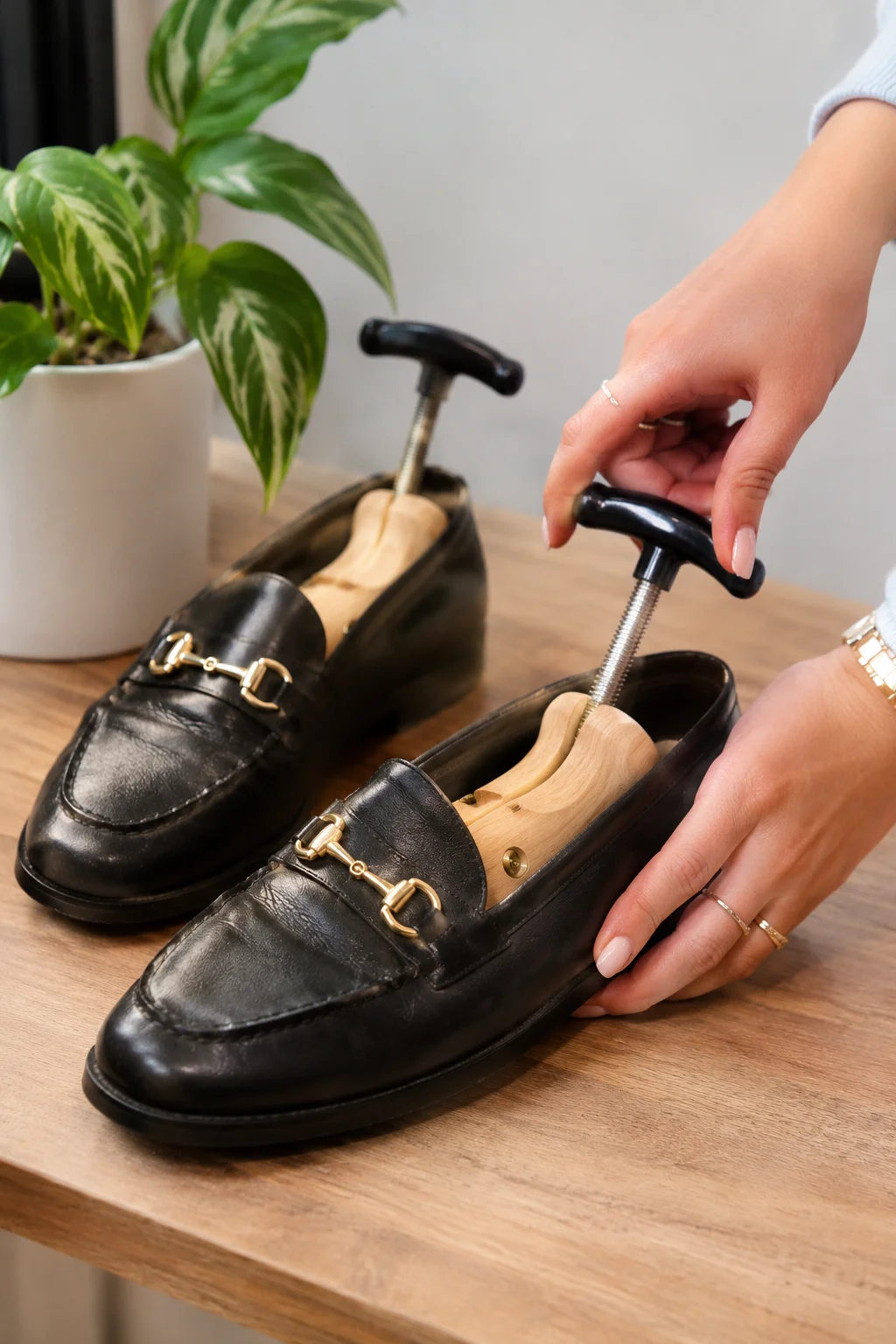
A two-way shoe stretcher is the most controlled home option when you need a little extra room. Many models expand across the width and some also adjust slightly in length. Models with small pressure plugs can target one area, such as the side of the toe box, instead of pushing the whole shoe outward.
- Loosen the stretcher until it can slide comfortably into the shoe.
- Position it so the widest part lines up with the area that feels tight.
- Turn the handle slowly until you feel gentle resistance. Do not force the shoe or strain its seams.
- Leave it in place according to the manufacturer’s instructions, then remove it and try the shoe on.
- If the fit has improved but still feels snug, repeat with a very small adjustment.
Do not confuse a shoe stretcher with a shoe tree. A shoe tree helps a shoe hold its shape between wears; a stretcher applies outward pressure to change the fit. For a valuable pair or a specific pressure point, a professional can often target the area more accurately.
3. Try Gentle Warmth for One Tight Spot
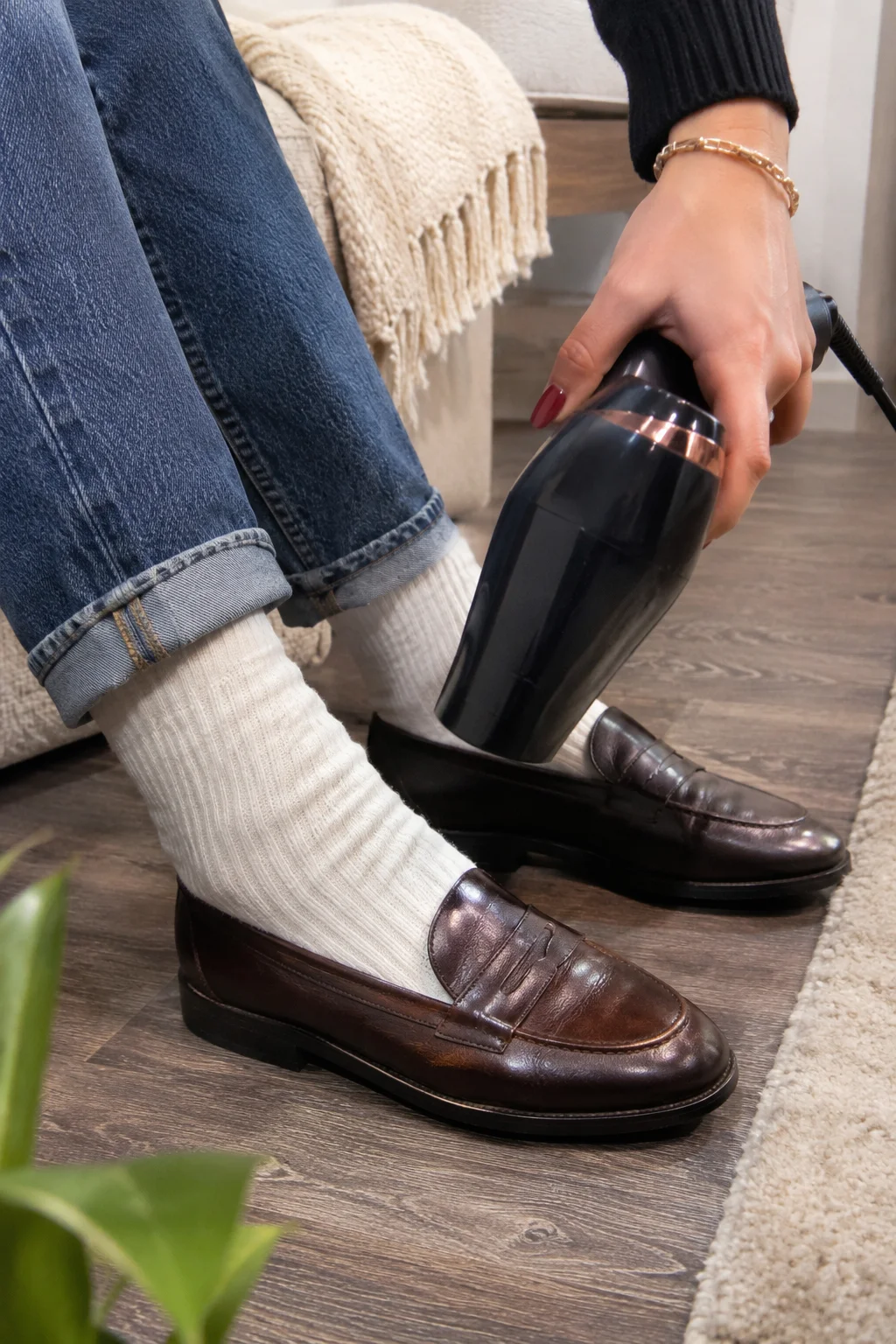
A hair dryer may help soften a small area of smooth leather, but heat is easier to overdo than the sock or stretcher methods. Use this only on ordinary, uncoated leather when the manufacturer does not advise against it. Skip it for patent finishes, delicate trims, glued or decorated areas, and shoes with unknown materials.
- Put on a pair of medium-thick socks and the shoes.
- Set the hair dryer to low or warm, not its hottest setting.
- Keep the dryer moving and hold it well away from the leather. Warm the tight area briefly rather than heating the whole shoe.
- Flex your foot gently while the leather is warm, then keep the shoe on until it cools.
- Check the fit. Stop if the leather becomes hot, changes color, or feels unusually dry.
Do not aim high heat at one spot or keep repeating the process in quick succession. Excessive heat can dry the leather and may affect finishes, adhesives, or decorative details. If you are not confident, choose a stretcher or cobbler instead. For more on gradual break-in, see Clarks’ guide to breaking in new shoes.
4. Use a Leather Stretching Spray Carefully
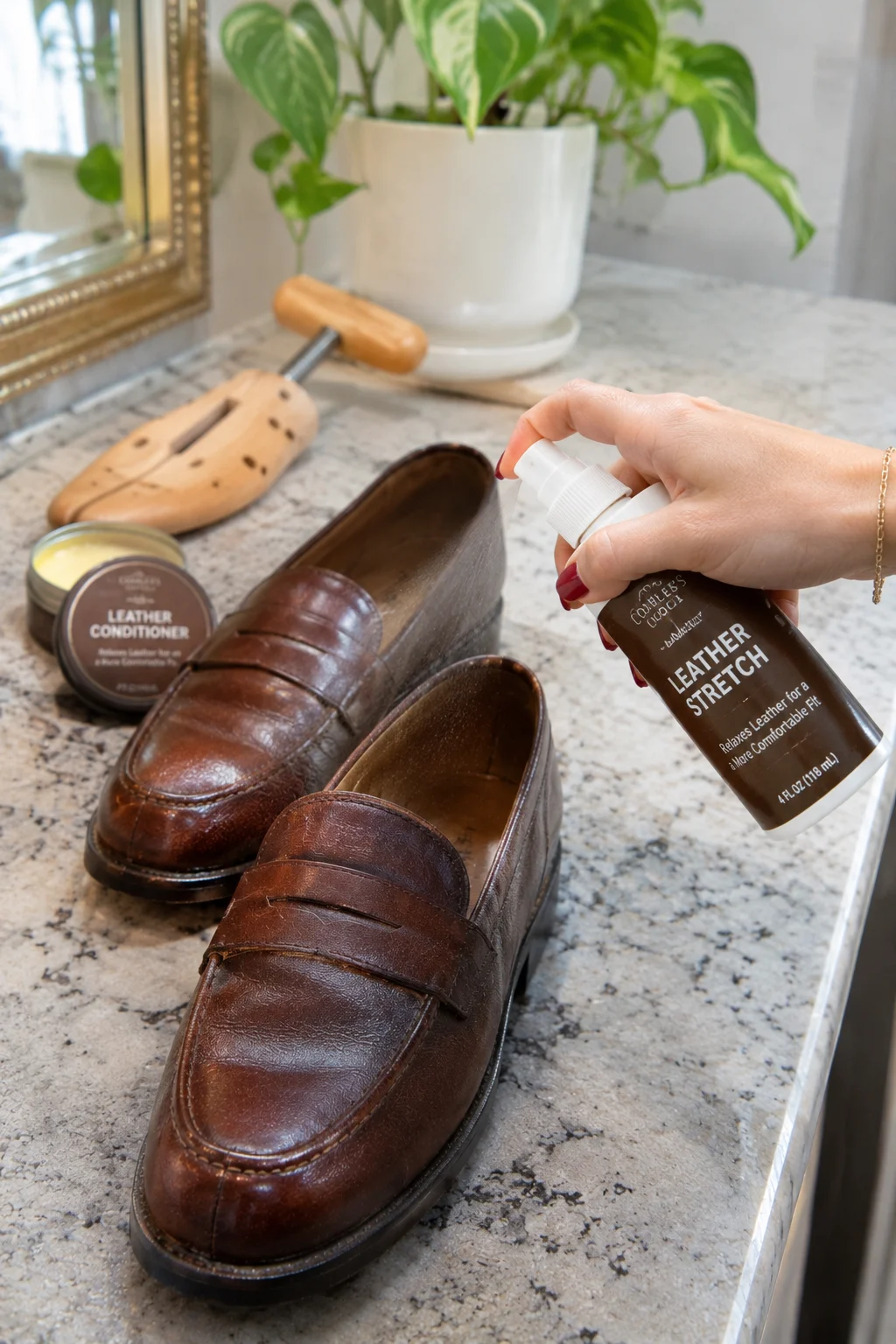
A shoe stretching spray is designed to help leather relax while it is being stretched. It is usually most useful when paired with a shoe stretcher or a short wearing session; spraying alone will not make a shoe larger.
Read the label before applying it. Test the product on a hidden area first, especially on colored leather, and use it only on the materials listed by the manufacturer. Some formulas are not suitable for suede, nubuck, patent leather, or particular finishes. Follow the product directions rather than mixing your own alcohol solution or applying household cleaners.
After stretching, use a leather conditioner only if the shoe’s care instructions allow it. Choose one intended for that type of leather and test it in an inconspicuous place, since conditioners can change the appearance of some finishes.
5. Ease a Stiff Spot by Hand
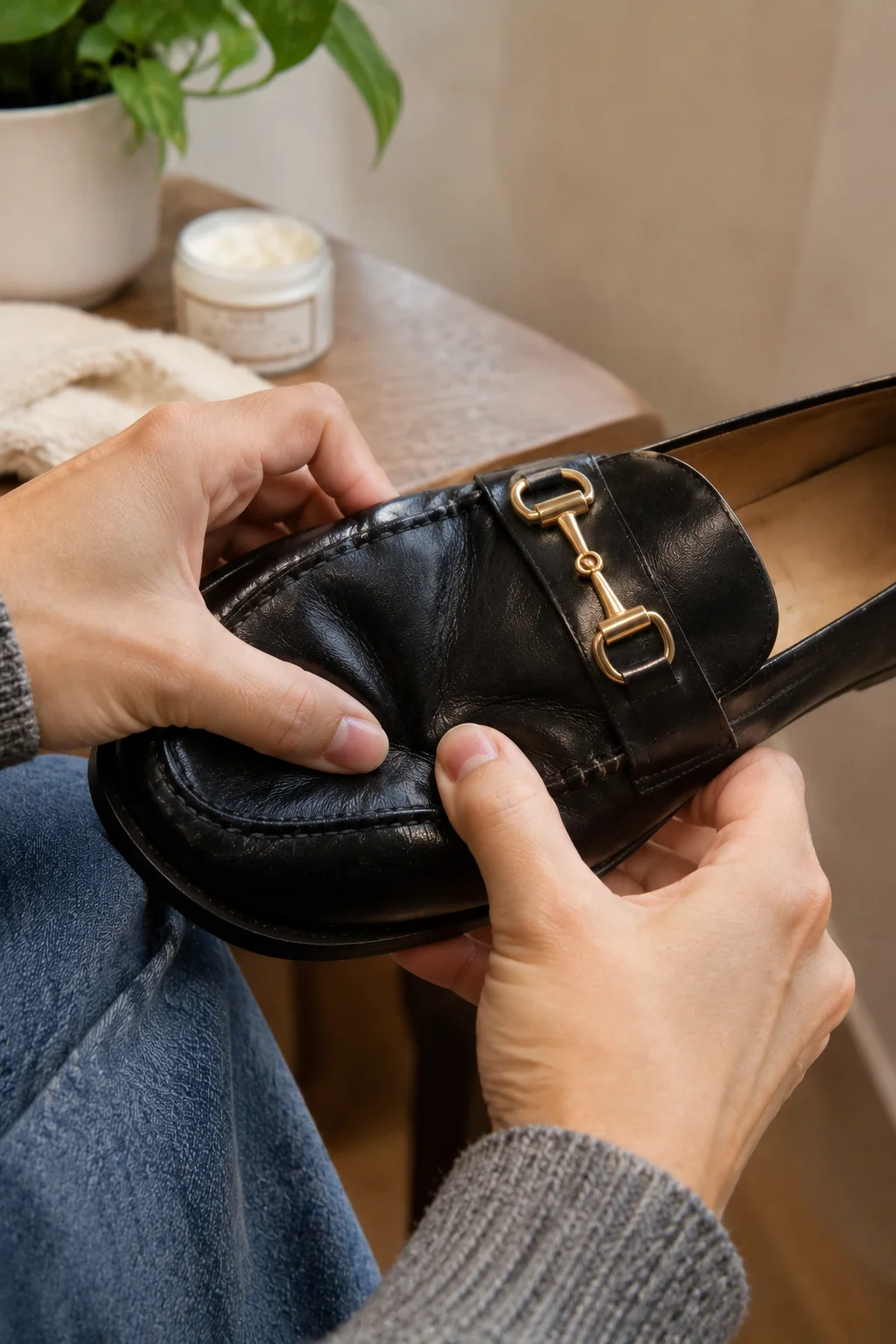
If one small section feels rigid, you may be able to soften it with gentle hand pressure. Use your fingers to massage and flex the leather around the tight area. Work slowly and avoid sharply folding the upper, pulling at seams, or pressing hard against delicate decorations.
This is a softening step, not a way to make a shoe substantially wider. It may help a stiff upper feel less rigid, but it will not correct a narrow last or a shoe that is too short. Stop if you see deep creases, surface cracking, or distortion.
Methods to Avoid on Leather Shoes
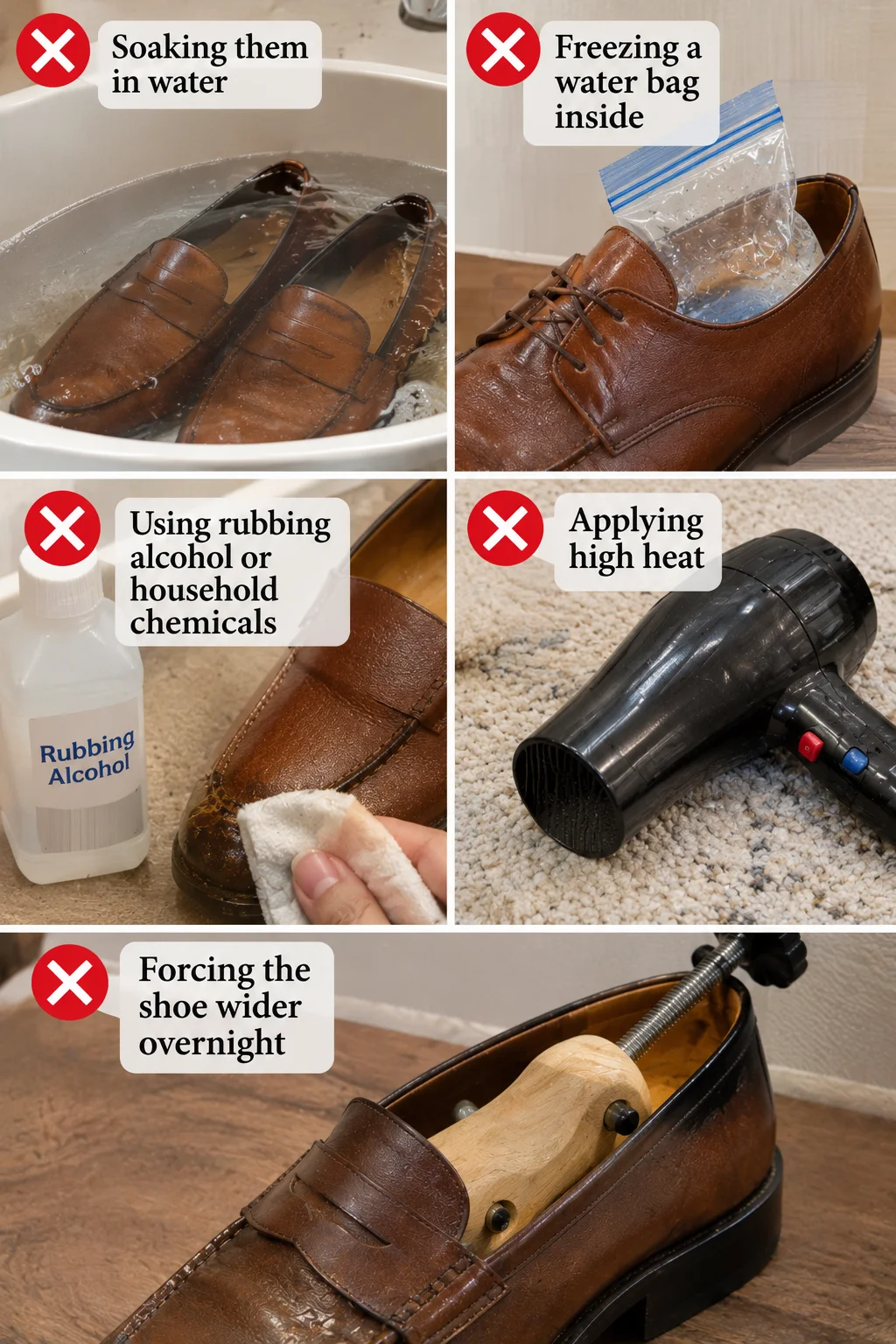
- Soaking them in water: Excess moisture can leave marks and affect the leather, lining, or construction. Do not submerge leather shoes to make them stretch.
- Freezing a water bag inside: A leaking bag can wet the lining and leave marks. The pressure is also difficult to control, so it is not the first method to choose for a good leather pair.
- Using rubbing alcohol or household chemicals: These can affect dyes and finishes. Use only a shoe product that specifically says it is suitable for your material.
- Applying high heat: A hot hair dryer, radiator, or direct sunlight can dry or damage leather and may affect glued components.
- Forcing the shoe wider overnight: Too much pressure can distort the shape or stress seams. Make small adjustments and check the fit between attempts.
For additional material-specific advice, compare the recommendations from Timberland’s leather footwear care guide and this Vogue guide to stretching shoes without damage.
Which Types of Leather Shoes Need Extra Care?
Smooth leather
Uncoated smooth leather is usually the most straightforward material to ease. Start with short wear sessions or a shoe stretcher, and avoid unnecessary moisture or high heat.
Suede and nubuck
These finishes can be flexible, but water, rubbing, and unsuitable sprays may leave marks or change the nap. Use a stretcher gently and choose a product specifically labeled for suede or nubuck. When in doubt, ask a shoe repair professional.
Patent leather
The glossy surface is a coating, so patent shoes are less forgiving than ordinary smooth leather. Do not use a hair dryer or aggressive pressure. If the fit is only slightly snug, ask a cobbler whether a small adjustment is possible.
Faux leather and synthetic uppers
Faux leather generally does not mold in the same way as natural leather. It may give very little, and heat can warp or damage the surface. If it pinches from the start, exchanging it for a better fit is usually more sensible than trying to stretch it.
When Should You Take Leather Shoes to a Cobbler?
Choose a cobbler if you need a targeted stretch over a bunion or one toe joint, if the shoes are expensive or delicate, or if the home methods have not improved the fit. A professional shoe stretcher can apply pressure to a specific area with more control than improvised household methods. A cobbler can also tell you honestly when the construction will not allow enough movement.
If the shoes are too short, your toes hit the front, or the shape is fundamentally wrong for your foot, do not keep stretching them. Look for a different size, width, or shoe shape instead. A useful overview of professional and at-home options is available from Galoche & Patin’s cobbler advice.
Practical Tips for a More Comfortable Fit
- Try shoes on later in the day, when your feet may be a little larger than they are first thing in the morning.
- Stretch one area at a time so you can tell whether the adjustment is helping.
- Compare both shoes after each attempt; one foot may need more room than the other.
- Wear the socks you expect to use with the shoes when checking the fit.
- Keep the heel secure. Making the whole shoe wider can create heel slipping even if the toe area feels better.
- Stop once the pressure eases. More stretching is not automatically better.
Frequently Asked Questions
Can you stretch leather shoes at home?
Yes, slightly tight genuine leather shoes can often be eased at home with short thick-sock sessions or an adjustable shoe stretcher. Make small changes and stop if the shoes cause pain or begin to lose their shape.
How long does it take to stretch leather shoes?
It depends on the leather, construction, and method. Short wear sessions may improve mild stiffness over several days, while a stretcher works gradually according to its instructions. Do not rush the process by applying more heat or pressure.
Can leather shoes stretch in length?
Only minimally, if at all. Stretching is more useful for width or a small pressure point. If your toes touch the front of the shoe, choose a longer size rather than trying to force the shoe to grow.
Does a hair dryer stretch leather shoes?
Gentle warmth may make ordinary smooth leather more pliable for a small adjustment, but high heat can dry or damage it. Use low or warm air briefly, keep the dryer moving, and avoid patent leather, delicate trims, and glued areas.
Can you stretch suede shoes?
Suede can give, but its surface is more likely to show marks from moisture or unsuitable products. Use a gentle stretcher and a suede-safe spray if the label permits, or ask a cobbler to handle the adjustment.
Will a shoe stretcher make shoes a full size bigger?
No. A stretcher is intended for modest adjustments, not to turn an incorrectly sized shoe into a full size larger. If the shoe is significantly too small, exchange it or choose a better-fitting pair.
The Best Way to Stretch Leather Shoes at Home
When leather shoes feel a little tight, start with short indoor wear sessions and thick socks. For a stubborn pressure point, a shoe stretcher gives you more control, while a carefully used low-heat hair dryer is a secondary option for suitable smooth leather only. Avoid soaking, freezing water bags, household chemicals, and high heat. Most importantly, stretch for a little extra comfort, not to fix a shoe that is the wrong length or shape. If the pair is valuable or the pressure is painful, let a cobbler assess it before you risk damaging the leather.